Part 2: Dealing With The International Community

Dr
Martin Rice is chair of the SETI committee of the IAA. When the
signal had been confirmed and made public, he became the chair of the
International Advisory Committee on the Analysis of Observational
Evidence of Extraterrestrial Intelligence. This body was set up to
coordinate efforts into studying the signal, with a reference to
decoding any messages, and to give advice on information distribution
and lead the way for debate as to what action should be taken as a
result of the signal. We meet for coffee in the romantic city of
Paris, along the Seine.
"Well,
we certainly had our work cut out. Years before hand, we'd predicted
the kind of questions that would arise, the infrastructure that would
be needed both to make certain decisions and act upon those decisions
and the resources and information gathering systems that would be
needed to analyse the situations and data that arose. We made
declarations for scientists and states to sign up to. However, the
world had a lot of more pressing matters at the time, so our
proposals had to wait.

"Then
the signal appeared, and suddenly we were thrown into the driving
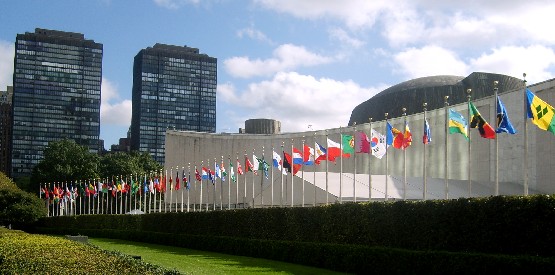
seat of policy making. Well, at least it seemed the UN wanted us to
be in the driving seat. In actual fact, we had no real power, other
than to explain what we knew and what we thought logically should be
done. The real policy deciding was inside the Committee on the
Peaceful Uses for Outer Space of the UN (COPUOS), where the nations
had their own advisers, pushing their own agendas.
"I
felt sorry for some of our expert witnesses, getting cross referenced
by national agents. These poor guys weren't politicians. They were
scientists. They could logically look at how any message could be
sent, the ramifications of sending a message, what the signal was and
what that meant. They shouldn't have been put through the wrack
because they were of a certain nationality and unfortunately
speaking to a bunch of politicians to whom place of birth was
everything to be suspect about.
"I
exaggerate a bit, I'm sorry. But there were times when people let
their nation come before the planet, and they just ripped into these guys
who were only trying to tell them the best possible approaches."

Dr
Rice himself was almost dismissed as a 'western operative' by both
China and Iran. Both countries’ representatives to COPUOS took back
their outbursts when leant on from above. He tells me he was glad
that there did at least seem to be some intelligence down here on
Earth.
"It's
a good thing that the people at the top knew how to keep a cool head.
At the beginning, though, there were a couple of walkouts. Again,
Iran being a big culprit - no surprise there, I was continuously
told. I knew a lot of the problems we faced were due to
misunderstandings."
Dr
Rice's struggle to do his job well, and motivate his team of experts,
paid off - even in the face of adversities.
"The
first part of our job had been done already. All the parties
involved in SETI had signed up to the Declaration of Principles
Concerning Activities Following the Detection of Extraterrestrial
Intelligence, which outlines who to pass information onto and how to
release the information to the public. But we still had to get all
the states to sign up to the Declaration of Principles Concerning the
Sending of Communications to Extraterrestrial Intelligence.

"This
was a big obstacle, most of all because many people interpreted it as
an intention to begin communications, which it wasn't. It was to set
up the decision making process. A treaty, if you like, regarding how
we will tackle the issues. It wasn't meant to be the decision in
itself. If COPUOS had decided against communication, and that was
carried by the General Assembly, then fine. This Declaration of Principles was never meant to be a Declaration of Intent - it was just a framework for the decision making process, that's all. But people didn't see it
that way at first. Some even thought it was a means to push the
agenda for communication through the back door, but that's
ludicrous."
His
frustration over some of the difficulties faced becomes quite
evident.
"How
can you make an informed decision on whether to communicate if you
don't allow the discussion and debate of ideas?
"Some,
like China, also had a problem with Article 5, which states that if
we choose to communicate it should be as one, instead of sending
individual messages - which the Chinese favoured. They were afraid of
any message being overtly 'westernised' and thus disproportionate of
the populous.
"That
was a hard one to tackle, but we knew we had the experts to produce a
message that would cater for everyone, if everyone wanted to send it.
"Before
we could get anywhere, we needed those signatures. I remember Andrej
Tadic coming up to me after the amendments had been written, and the
signatures had been placed, and saying 'I think you've just saved the
UN'. I don't know how serious that statement was. Could the UN really
split up just from this? But then, if you think about the long term,
there were problems of security and confidence if it was seen that
one nation was trying to cavort with ETI against another. We needed
everyone on board, just to make sure they didn't do anything stupid."
Dr
Rice's next problems lay with getting the infrastructure to work and
come up with some suggestions for action. All of this, while still
trying to coordinate efforts with the analysis of data. Some of his
colleagues express their amazement that he managed this without a
serious amphetamine addiction.
"There
were some long, long days. Some of which felt like banging your head
against a brick wall. We made progress, be it slowly - and even some
unexpected friendships. Goh Chin, the Chinese representative, and I became
good friends shortly after the signing, even if we didn't always see
eye to eye. I found nothing stimulates you more through the long
hours than stimulated, intelligent debate. When he came round to the
idea of suggesting the one message approach as an alternative to the
many messages approach, he was constantly in touch with the team. And
not just for the Chinese, but also to make sure that the Far Eastern
interests as a whole were looked after. I think it also helped that
we didn't talk too frankly about each other’s political beliefs. But
we had many a pleasant meeting over dinner to discuss the committee.
"Still,
even with people now on our side to actually get a report done, it
was still a lot of work. I had to sift through so much information
from the IAA and all the other bodies involved in the analysis.
Constantly going from meeting to meeting. If I got 5 hours sleep a
night, I was lucky.”

Part
of the International Advisory Committee's job was to inform COPUOS of
what they had decoded from the signal, and what this had led them to
learn about ETI and their system, and to advise them on how and when
to publicise the information. It was this part of the job that thrust
Dr Rice into the media spotlight.
"Well,
of course, after a lot of work decoding - and I mean a lot of work,
like almost a year - we were finally getting down to what the nature
of the signal actually was, which came as quite a shock to some
people. And once that nature was ascertained, we held a meeting about
distributing that information. The first step was decided to be a
presentation to the General Assembly itself (with the media in
attendance), which COPUOS was adamant would be given by Dr Joseph
Lesley, Prof Charles Bridges and I. Next we would start circulating
publications to various universities, colleges and institutions."

That
presentation would turn out to be more like the one everyone had
hoped for when Dr Lesley first announced his findings.
"The
atmosphere was electric. People were expecting some great message
from across the cosmos, speaking to the people of earth - 'we come in
peace' or even ' we will destroy you in 5 days'. Of course, we knew
that wasn't what we were looking at from the start. It was obvious to
us that this was no deliberately sent signal. It wasn't on the right
frequency. It didn't have the characteristics - no repetition in the signal, it was
more like a constant stream of information. Plus it used a spread
spectrum - this isn't a technique you'd think of using to send a
signal across the cosmos, because basically the chance of detection
is low.
"We
knew we'd stumbled on an information highway, if you like."
And
they had. What they decoded was a vast amount of information.
Telecommunications information. They were listening in to ETI's phone
calls, and watching their TV.
"The
images came much later, but the voices were what we got first. Just
getting any audio took months of work, and necessarily kick started a
major revolution in our technology in order to decode and interpret
it. We'd leapt forward quite significantly in science, due in large
part to a lot of dedicated specialists."
Dr
Lesley even got to have his sound bite, proclaiming 'Ladies and
gentlemen, I give you the voice of Centauri...' Needless to say the
language was complete garbage to everyone. But the context didn't
matter just then, it was the first time human kind had heard language
outside the solar system. For a whole minute the General Assembly was
silent. As was every TV room in every corner of the world.
"We
thought we could hear 4 distinct voices in conversation with pauses between each speaker, which lead us to believe
that this was some sort of conference line. Of course we couldn't
confirm any suspicions we had about the signal, because we had no
reference point for the language. So our next job would be to find a
reference point. That meant more hard work, and more searching for
appropriate signals, hopefully visual ones.
"Not
only might we be able to see what they look like, but we could also
try to infer some clues as to how the language worked through ETI's
textual interaction with each other and their world.
"Of
course a huge amount of assumption was made here. We thought that
because of the advanced state of the technology being used, even if
their species had several languages (as we could assume, looking at
our own species), we were most likely listening to a kind of Lingua Franca. This may have been their language of economics or politics,
of cross cultural sharing of information. Thus, deciphering this
language would open up channels of communication between us, should
we decide to go down that path.
"I
have to admit, many of us around the world almost had an uneasy
feeling about just 'listening in' and 'spying' on ETI. We almost felt
like peeping toms or stalkers. But we knew this was the only way to
find out what we needed. I mean, for one thing, just remember we were
listening to a conversation from about 4 and a half years ago. If we
sent a message to them to try and get a reply and open up
communications (and thus get an understanding of their language and
species) it would take 4 and a half years to get there. Then they
would take their time to decipher that - even if they heard it - and
probably go through the same processes and questions that we did for
their signal. Say another year or 2. Then send a reply to us, which
would be another 4 and a half years. It would take 11 years to get
through that alone! And that's assuming we both decipher each other's
messages correctly first time, which would be very unlikely. If we
need to send messages to confirm receipt and ask for clarification,
then it's another 9 - 10 years added on. The process could take
generations. Bear in mind how long it took us to decipher the first
signal.
"If
we had picked up a message sent to us in the first place, this is
probably how it would have gone. But because we were just
eavesdropping, we had an opportunity to try and understand them
first, and so get an idea about how to communicate on their level. We
were essentially saving generations of work. In a nutshell, we saw an
opportunity and we took it."
I
have to ask one last question that has vexed many people. Why didn't
they seem to know we were here?
"Who
knows? We know they had astronomical institutions, and stories
concerning life outside their atmosphere. Maybe they were looking in
the wrong places. Maybe they just couldn't tell we were here, because
of some random background event that happened when they looked in our
direction. Remember, it was a fluke that we found them. Maybe they
just weren't lucky. Their signals were stronger than ours - even in
our solar system it's hard to discern life on earth from any other
radiation. Maybe funding for their SETI program was given less
attention, and funds diverted to more seemingly worthy causes. We
certainly nearly lost this discovery to that. Even if they did find
us, they may not have sent a deliberate signal to us, for the very
same reasons that some people felt we shouldn’t send one to them.
"There
are a lot of reasons they might not have noticed us. All we know is
that they didn't, and we did."

No comments:
Post a Comment