Part 1 (Continued)

I
have been given a great privilege in being able to hold an audience
with the Ex-Secretary General of the United Nations, Andrej Tadic, at
his office in Zagreb.
"The
first time the signal came to my attention was only a few days after
it's detection. This was before it was confirmed, of course, but at
such time that it was becoming more and more clear that this was
truly an Alien signal. At that time it had already been passed on to
the relevant authorities, so I kept only a tentative check on its
progress.
"My
office had still so much to deal with in the world that giving this
more than just a preliminary glance wasn't an option. We still had
the war in Afghanistan, the civil war in Cuba after Castro's death,
Problems ratifying the new carbon emissions program, the cleanup
operation after the Wailing Wall bombing - along with the subsequent
peace-keeping role. Then, of course, our biggest concern was the
nuclear programme in North Korea, who’d
just tested their latest missile system. That's
just some of the tasks we had to get through. The UN is a huge
institution, and looking after all off it takes a lot of time and
concentration.
"The
message was a shock. No one in my position has ever received a memo
like that before. So I kept my ear to the ground, but all I could do
was let the teams get on with their job, so I could get on with mine.
The most I did for the effort at first was to make sure the
International Telecommunications Union could protect the relevant
frequencies.
"It
was mid July when it became a priority. Partly because it really was
becoming empirical evidence of Extraterrestrial Intelligence, and
partly because it was fast becoming public knowledge. My office was
getting leant on by all sides then. Governments wanting to know what
to tell their people, Scientists wanting to know what our protocols
should be. It was one of those times when you wish the office carried
the same powers as a head of state, but for very good reasons that's
not what the UN is about. We only had a few ideas of protocols for
dealing with this. Questions that we should have had answers to in
preparation for this, but didn't - simply because we were too busy
keeping the planet together.
"I
met with Dr Lesley and his team a couple of times in early July. I
guess I had a schoolboy curiosity and excitement about it. We spoke
increasingly about how the signal looked, about how to deal with the
media interest, and on what we should do if it is Life. I kept in
touch regularly with the various institutions involved, and when we
were pretty certain of what was going on, I made sure that they got
all the resources they needed.
"On
July 10th, when Dr Lesley and all the teams were able to come to a
consensus, we decided to fly Dr Lesley and Prof Bridges to my office
for a press conference. It was a rushed affair in itself, but people
were beginning to feel they'd waited long enough, and I could feel
that too.
"To
be honest, all they wanted was to know, to be told - and a few
remarks of how we know, and what this means, along with what we're
proposing to do about it. Having Dr. Lesley there was a bit of a
formality in hindsight (mostly because we thought the discoverer
should have the honour of recognition), but we just wanted people to
know everything we did.
"We
did think, though, that this would calm people somewhat into letting
us do our job. We knew there'd be a lot of excitement, but with
everyone knowing about it, we thought it would take the tension away
- especially some of the 'conspiracy theory' tension that was quickly
becoming rife. We certainly didn't expect what came next, and that's
why we didn't have any protocols set in place for it.
"It's
one thing finding out that there's life out there, but then you have
to deal with everybody's ideas of what that means and predictions of
the ramifications - 'are they hostile?', 'should we send a message?',
'should we be prepared?', 'can they bring Elvis back please?'. There
were religious groups determined that they should be allowed to
evangelise and preach to them. Whole groups of people who wanted to
send a signal back, and claimed it as their legal right - countered
with whole groups sworn to destroy any machinery used to signal back
for fear of the risk we'd be putting ourselves in.
"We
just hadn't agreed on any suitable protocols in time to deal with
this eventuality - partly because it was in no way certain that it
was ever going to be an eventuality.
"It
is very strange, though, that the one thing we all thought would
unify the planet - more than any of the work done by anyone on earth
- actually fragmented humanity to an immense degree at the
beginning."
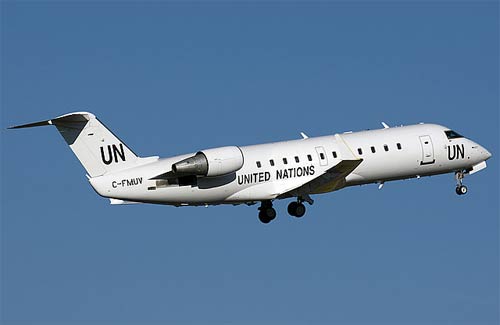
The
Pandemonium quickly followed. The Secretary General was rushed off onto a tour of the globe, meeting heads of state, prominent
scientists, leaders of major religious groups and the world's press.
Not only were there now being drafted protocols to agree on what to do about this
revelation, but also on how to deal with popular reactions to it.
"We
had to work quick to set up the International Advisory Committee on
the Analysis of Observational Evidence of Extraterrestrial
Intelligence and the International advisory Committee for Extra solar
Contact and Interaction, both of which were already being created by
the SETI scientists, but which still needed international approval -
certain states demanded that they have representatives on both to ensure
the freedom of information and to represent their interests. China
was a huge obstacle on this one, determined to send their own signal
- whilst many of the Middle Eastern communities were adamant that
under no circumstances should we send any signal. Debates got very
heated in the UN - at some points it almost seemed close to collapse.
Yet it was of utmost importance that even
if we were
going to send a signal, it should be as one - and we weren't even
sure about sending anything yet. That needed further debate. This
debate almost became insignificant in the long run though."
The
ex-Secretary General looks quite solemn for the moment. It is clear
that whilst he feels extremely honoured to have held the position he
did during these years, he is still very saddened that things turned
out the way they did on his watch.
He
turns back to me, obviously with something else on his mind.
"Again,
it's incredible just how fractional humanity can be even in the face
of such a significant discovery. I am reminded by Dr Lesley's words
'I wonder if God came down to speak to man, would they all be
fighting over who gets to have his phone number?'.
"I
sympathised with Dr Lesley on this, but I had to keep reminding
myself that this is how the UN works, and precisely why it exists. We
are a fragmented species, and though we are willing to cooperate and
try to find common ground, many millennia of experience has made us
keep checking our backs.
"We also had to set up the infrastructure to disseminate information and counter disinformation. Although the website was a good starting point, this was difficult – mostly because the website wasn’t actually as well established in the media eye as it should have been.
"We also had to set up the infrastructure to disseminate information and counter disinformation. Although the website was a good starting point, this was difficult – mostly because the website wasn’t actually as well established in the media eye as it should have been.
“We
weren't just simply fighting against isolated groups of conspiracy
theorists and UFO fanatics. We had to fight against people who
held public sway, prominent speakers, even people who held viable
beliefs and good arguments. The problem wasn't always that they were
wrong, but that they assumed they were right. No one had answers to
the big questions yet, we had to wait for that.
"Along
with this infrastructure we had to give resources and aid to various
nations who had to cope with unrest due to the revelation. We hadn't
anticipated all of this. Largely because many of the world’s
religious leaders had said long before that ETI did not threaten
their beliefs."
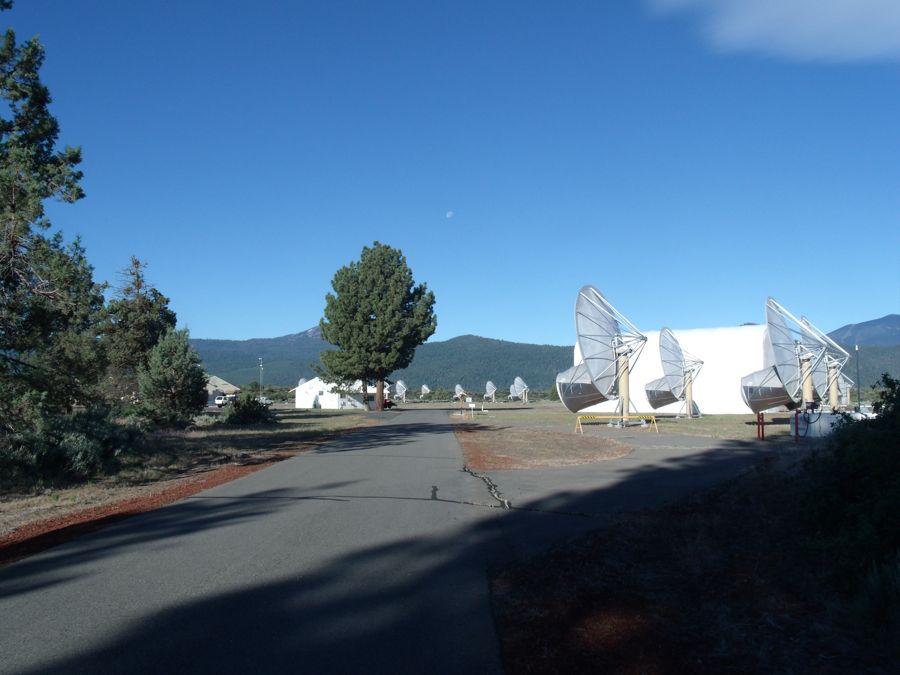
This
lack of preparation (and the disinformation that was being
circulated) was highlighted by the attack on the Hat Creek Radio
Observatory in California. Over 100 anti-message activists, many
wearing T-shirts depicting the face of Theodore John Kaczynski, overran the 350-antenna compound, destroying several of the
telescopes, shortly after 10pm on August 4th. After several hours of
firefighting with authorities, who were both late on the scene and
ill-equipped for the confrontation, the activists retreated into the
visitors centre with 5 staff as hostages. The activists' extreme
ideological views soon made it apparent that this would not end
peacefully. At dawn the next day, sufficiently reinforced, the
authorities were left with no option but to storm the building. 57
activists were arrested and charged with terrorism, the rest lay dead
around the site. 12 officers gave their lives, and another 20 were
wounded in the liberation. Only 3 of the hostages survived.
Andrej
Tadic visited the compound 2 days later with the President of the
United States.

"I
just couldn't believe my eyes. So much bloodshed and damage, all over
fear and misunderstandings. What struck me most at that moment was
how organised this movement had been - and thus how great the task
ahead of us."
The
event shook many people around the world - most significantly the
scientific community. The activists had made a big point, though also
a big mistake. Hat Creek is above the 29th Northern Latitude, and so
couldn't see the Centauri system (which is in the Southern sky), let
alone be involved in any attempt to signal back.
Such
incidents were rare and isolated, thankfully, but they did highlight
a growing concern for human security - from outside our atmosphere
and within.
"I
am grateful to the international community in at least seeing that
this was a situation that had to be dealt with effectively and with
cooperation, even if not everyone saw eye to eye on the bigger
picture. The last thing we needed was any official or unofficial
state support for this terrorism."
Many
political analysts have come to agree that Mr Tadic's handling of the
whole affair, along with the other very serious issues around the
world, is what guaranteed him his second term in office. He was awarded the
Noble peace prize, and has been acclaimed as the most significant
Secretary General since Cuellar and even the birth of the UN.

No comments:
Post a Comment