Part 1 (Continued)
Prof
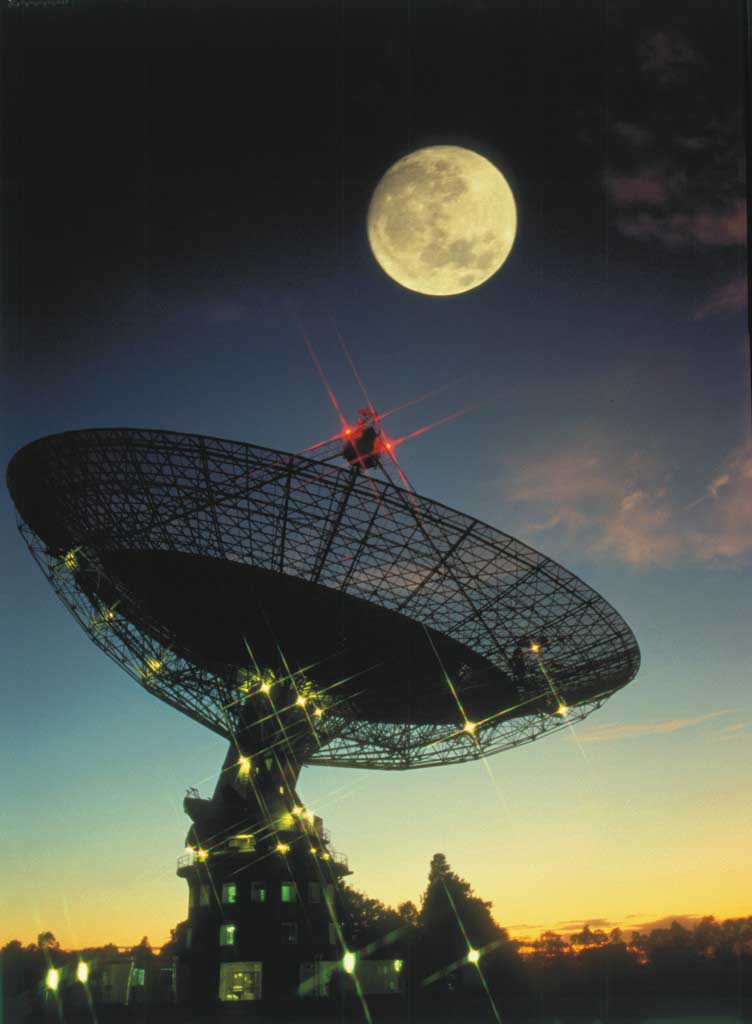
Charles Bridges welcomes me into the control room of Parkes
observatory in Australia. His team was instrumental in verifying the
signal from the Centauri system in the weeks following its discovery,
and in helping with the ongoing data gathering and analysis of the
signal.
Parkes
radio telescope is the largest in the southern hemisphere, and was
able to keep an almost constant vigil over the Centauri system.
He
is also probably one of the most charismatic figures involved in this
event that I have had the fortune to interview.

"Well,
I've got to admit, the first thing that went through my head was
'well here we go again'. It was another run through of checks to make
sure that it wasn't some natural phenomena in the sky, signals
bouncing back into the atmosphere, and checks on the hardware and
software to see if this was a hoax or a bug. Although most times we
are looking at something quite amazing in the universe, sometimes
it's tiresome to have to keep getting your hopes up just to deflate
afterwards.
"It
was a couple of days in though, that we started getting excited about
it. Not too much, just a bit. We knew we were getting something.
“Everything
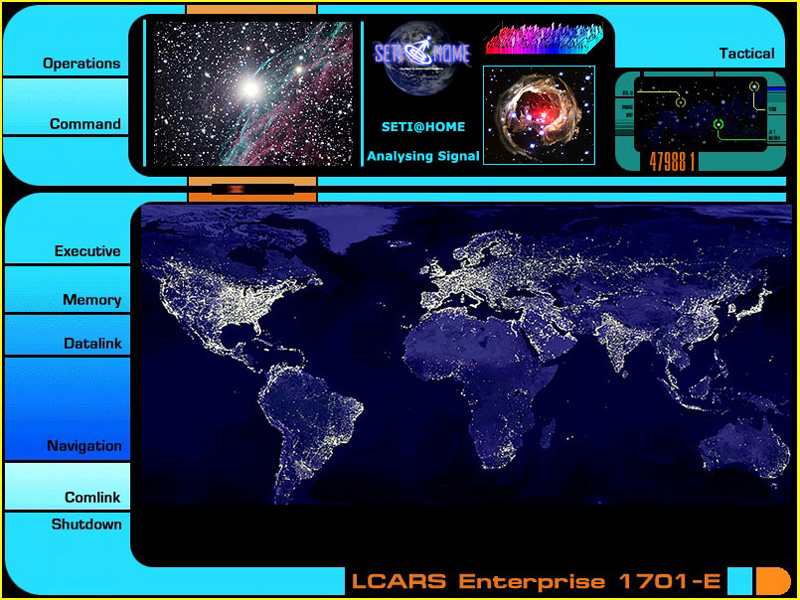
went onto the SETI website. We spent as much time uploading data and
commenting online as we did collecting and analyzing data.
“The
emphasis on every post, though, was that we were confirming someone
else’s discovery. There was never any interest in claiming it for
ourselves.”

Prof
Bridges is echoing what I've heard from pretty much all of the
scientific community involved. It seems that this community values
its integrity very highly. Quite possibly because the nature and
usefulness of their chosen field has so often been brought into
question. In a world seemingly full of adversaries it doesn't bode
well to make enemies.
"I
was in constant contact with Joseph, comparing data, sharing hopes
and fears. God bless the Internet. Without that technological
revolution, it would have been years before we got anywhere. Not only
did it help with exchanging information, but also the SETI@HOME
program made it possible to analyze huge amounts of data in a
fraction of the time.
"We
were constantly sending streams of information through it. The people
who signed up should be given medals. They helped advance our
knowledge and understanding by amazing factors. To show our
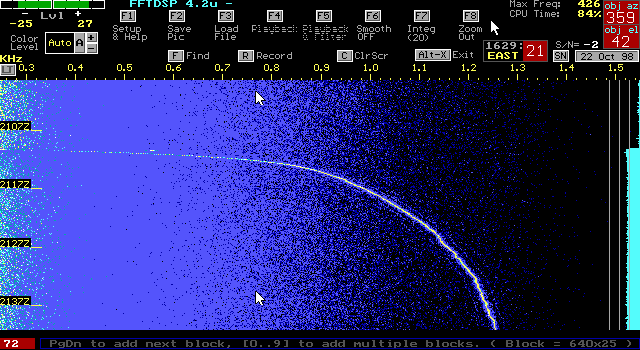
appreciation, Joseph and myself decided to send a print of the
original signal to them to put up at home, along with a letter of
gratitude. We couldn't have got this far this quickly without them."
Although
Dr Lesley's team at UC Berkeley retained their position at the hub of
data analysis, the Parkes telescope became the natural centre for
observation of the signal.
"It
made sense really. Although Arecibo could see the system at this time
of year, come the winter months it would be lost to them as it dipped
behind the horizon - it's almost a miracle they heard the signal at
all. We were able to keep a year round track of the signal for them.
"Knowing
we were such a major part of the operation gave us an enormous sense
of head swelling ego."

Prof
Bridges is right to feel such pride. His team led the gathering of
data making the decoding of the signal possible - leading to the
presentation in the General Assembly, and subsequent discoveries and
deciphering of signals with major importance in determining the
nature of ETI and creating policies about the issues that became
apparent.
But
those first weeks verifying the signal were some of his most
exciting.
"When
you’re so use to getting nowhere, and yet you find that signal that
just keeps defying all other explanation, and you finally begin to
let yourself go with the anticipation of its logical conclusion, the
feeling is ecstasy.
"Every
day I could swear Joseph's voice went up an octave in excitement,
until he was nearly screaming like a schoolgirl!
"That's
not to say there wasn't any confusion. The signal looked nothing like
how we’d expect a signal sent to us would. That's part of why it
took us so long to believe it, and so to admit it and publicize it.
Sure the press was there straight away, but we're scientists. We take
a lot of convincing."
And
convincing they got.
"I
remember being on the phone to Joseph, I think he was actually living
at Berkley at that time. He was screaming 'this is it! This is
fucking it!'. We had Berkeley on the conference line, so everyone
could hear the champagne bottles popping, and the shouts. I know he
says we weren't fully convinced until later, but we were definitely
convinced enough to party. It was the day after that I flew over to
Puerto Rico, where we relived the celebration over again.
"I
think we lost a good 2 hours of brain power the next day due to
hangovers."
Prof
Bridges was called upon for a brief presentation at the conference in
New York, and to help with the questions.

"Some
of the questions we had, from members of the more sensationalist
press, were just ludicrous: 'What is the message?', 'What do they
look like?', 'Are they peaceable?', 'what shall be our reply?'. No
matter how many times we tried to tell them that our deciphering of
the signal was substantially incomplete (not even started, to be
honest) they still kept firing them at us.
"I
remember thinking, 'Doesn't anybody speak English anymore?'. How can
we answer these questions when we've only just confirmed the signal?
These answers would take ages to formulate, assuming we even could."
The
Parkes observatory team didn't let the mountain of work ahead of them
daunt them though. They were riding on the crest of a wave, charting
unexplored territory in astronomy.
I
ask him, then, about the effect the Hat Creek incident had on him and
his team.

"Bloody
idiots! What's the sense in trying to put back Man's advancement in
knowledge and reasoning? Where's the sense in the bloody slaughter?
I'm glad we don't have such a high case of that type of whack job in
Australia.
"The
whole of the SETI community held a minute's silence for the 2
researchers the next day. Bloody sad business, if you ask me. But for
every person who stood against progress, many millions stood for it.
That kept the community strong. The sense that we had a morale
mandate. We were always receiving emails praising the work we were
doing. It actually got a bit out of hand, and we were glad of Dr
Shostak’s website idea, because the emails would just back up the
system otherwise.
"But
seriously, the people and their support were just fantastic. I felt
like a movie star."

No comments:
Post a Comment